Oxygen Dips and Blood Pressure: 2026 Review
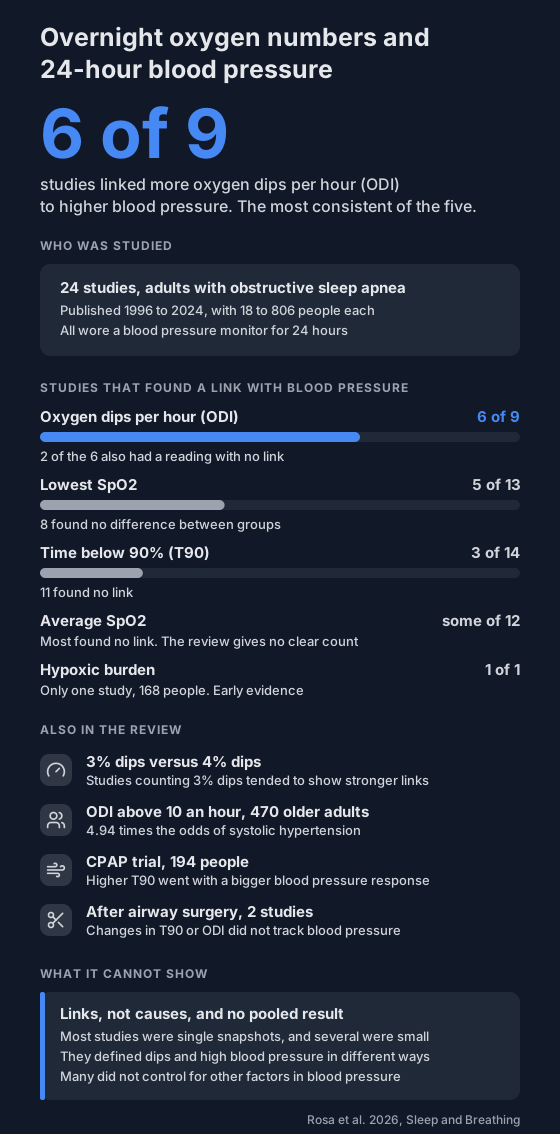
A 2026 systematic review of 24 studies looked at which overnight oxygen numbers go with 24-hour blood pressure in adults with sleep apnea. ODI had the most consistent link.
High blood pressure is common in people with sleep apnea. The review puts it at up to 50%. An overnight oximeter report has several oxygen numbers on it. Which one goes with blood pressure?
A 2026 systematic review went through 24 studies. ODI, the count of oxygen dips per hour, had the most consistent link.
Who was studied?
- 24 studies of adults with obstructive sleep apnea, published from 1996 to 2024.
- They had 18 to 806 people each.
- Every study used a blood pressure monitor worn for 24 hours.
Which numbers went with blood pressure?
- ODI (9 studies). The review counts six where higher ODI went with higher blood pressure, and five with no link. Two studies are on both lists, because the answer depended on the blood pressure reading checked.
- Lowest SpO2 (13 studies). Five found a link and eight didn't. It's a single reading, so one artifact can set it.
- T90 (14 studies). Three found a link and 11 didn't.
- Average SpO2 (12 studies). Most found no link.
- Hypoxic burden (1 study). It combines how deep and how long each dip is. See oxygen burden.
Does the dip size matter?
Studies that counted 3% dips tended to show stronger links than studies that counted 4% dips. No study compared the two in the same people. Here's what counts as a dip.
In one study of 470 older adults, an ODI above 10 an hour went with 4.94 times the odds of systolic hypertension after adjustment.
What about CPAP and surgery?
- In a trial of 194 people with resistant hypertension, higher T90 went with a bigger blood pressure response to CPAP.
- In the hypoxic burden study (168 people), a larger fall in burden went with a larger fall in systolic pressure. Changes in ODI showed no such link.
- In two studies of airway surgery, changes in T90 or ODI didn't track blood pressure.
What can't it show?
- The results weren't pooled, because the studies differed too much.
- Most were single snapshots, so they show links, not causes.
- Several were small, and many didn't control for other factors that affect blood pressure.
- Studies defined dips and high blood pressure in different ways.
- One author holds stock in a company that sells a home sleep apnea test.
What can you do with it?
- ODI is on your overnight report. You can compare it across nights.
- Home oximetry is not a sleep study.
- If your blood pressure is high, share your recordings with your doctor.
Not a medical device. Does not diagnose, treat or prevent any condition. Discuss results and changes with a clinician.
References
- Rosa CFA, de Paula Soares CF, Cahali MB. Which nocturnal hypoxemia parameters are associated with ambulatory blood pressure monitoring in adults with obstructive sleep apnea? A systematic review. Sleep and Breathing. 2026;30(4):206. doi:10.1007/s11325-026-03742-8