Diabetes, Insomnia and Sleep Apnea Together
A 2026 study of 12,715 adults sent for a sleep study in Türkiye found that 33.9% of those with diabetes had both insomnia symptoms and sleep apnea, against 24.1% of those without.
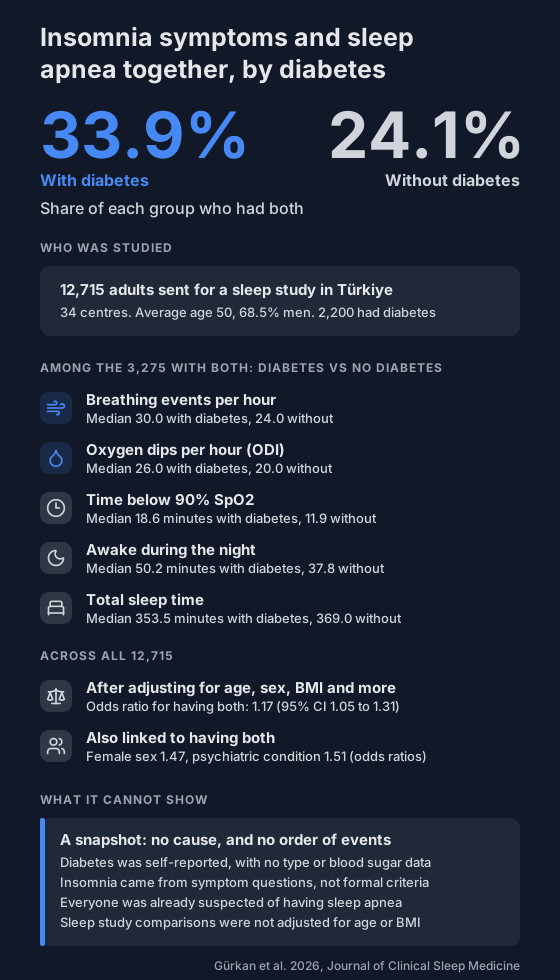
Diabetes and sleep apnea often turn up together. So do diabetes and insomnia. A 2026 study from Türkiye looked at people who had all three.
Who was studied?
- 12,715 adults aged 18 to 80, sent to one of 34 sleep centres because sleep apnea was suspected.
- Average age 50, and 68.5% were men.
- All had a full overnight sleep study in a lab.
- 2,200 of them (17.3%) had diabetes, by their own report or their medication list.
- Insomnia meant often having trouble falling or staying asleep, taking 30 minutes or more to fall asleep, or using sleeping pills.
What did it find?
3,275 people (25.7%) had both insomnia symptoms and sleep apnea.
- With diabetes: 33.9% had both.
- Without diabetes: 24.1% had both.
People with diabetes were also older, with a higher BMI. After adjusting for age, sex, BMI, smoking, education and other conditions, the odds ratio was 1.17 (95% CI 1.05 to 1.31).
Being female (1.47) and having a psychiatric condition (1.51) had larger odds ratios than diabetes.
How did their nights compare?
Among the 3,275 with both, here are the medians with diabetes against without:
- Breathing events per hour: 30.0 against 24.0.
- Oxygen dips per hour (ODI): 26.0 against 20.0.
- Time below 90% SpO2: 18.6 minutes against 11.9.
- Time awake after falling asleep: 50.2 minutes against 37.8.
- Total sleep: 353.5 minutes against 369.0.
These comparisons weren't adjusted, and the diabetes group was about five years older with a higher BMI.
What doesn't it tell you?
- Cause or order. It's a single snapshot. It can't show which came first.
- Everyone. These were people already suspected of having sleep apnea, in one country.
- Diabetes detail. Type and blood sugar control weren't available.
- Insomnia. It came from symptom questions, not formal criteria.
The authors suggest doctors check people with diabetes for both insomnia and sleep apnea. They mention CPAP together with cognitive behavioural therapy for insomnia as a combined approach, but this study didn't test either.
What can you do with this?
If you have diabetes and sleep badly, tell your doctor about both the broken sleep and any snoring or pauses in breathing. The sleep apnea risk check takes about a minute and helps you decide whether to raise it.
An overnight oximeter can't tell you whether you have sleep apnea or insomnia. It logs your oxygen and pulse, and you can share that with your doctor.
Not a medical device. Does not diagnose, treat or prevent any condition. Discuss results and changes with a clinician.
References
- Gürkan CG, Pihtili A, Kiyan E, Tasbakan MS, Basoglu ÖK, Arbatli S, Aydin S, Cilli A, Dursunoglu N, Baran B, Peker Y; Turkapne Study Group. Diabetes mellitus is associated with increased prevalence and severity of COMISA: evidence from the nationwide TURKAPNE cohort. Journal of Clinical Sleep Medicine. 2026;22(1):103. doi:10.1007/s44470-026-00109-4