What Does SpO2 Mean?
What the SpO2 number on a pulse oximeter measures, how the device works it out, and how to read your overnight readings.
SpO2 is the percentage on your pulse oximeter. It stands for peripheral oxygen saturation. Here's what that means in plain terms.
What is it measuring?
Your red blood cells carry oxygen on a protein called hemoglobin. SpO2 is the share of that hemoglobin that's carrying oxygen right now. So 96% means about 96 out of every 100 are loaded.
The "p" matters. It means the number was read at the edge of your body, usually a finger, and not from a blood sample.
How does a ring or clip work that out?
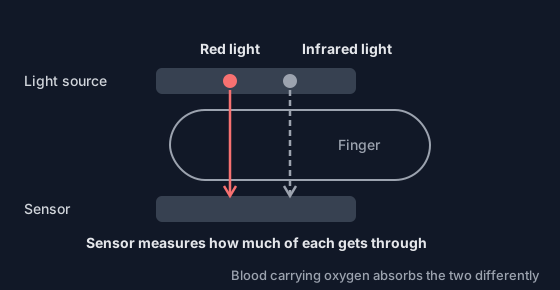
It shines red and infrared light through your finger. Blood that's carrying oxygen absorbs those two colors differently from blood that isn't. The device compares them and estimates a percentage.
It's an estimate, so it can be off. Cold hands, movement and a loose fit are the usual causes. We covered those in why your reading might be wrong, and there's a separate post on skin tone.
What number should you expect?
Published references usually put resting SpO2 at sea level between 95% and 100% for adults without a lung or heart condition. That's a reference range from the literature, not a verdict on you. A few things shift it:
- Altitude. Higher up, the number sits lower. See blood oxygen at altitude and on a flight.
- Sleep. Most people read a point or two lower asleep than awake.
- The device. Two oximeters on the same hand can disagree by a point or two.
If your daytime readings often sit below that range, or you feel short of breath, talk to your doctor.
Why does one reading tell you so little?
A spot check is a few seconds of your day. Overnight, a ring records thousands of readings, so you get a few different numbers:
- Your average SpO2 for the night.
- Your lowest reading.
- How often it dipped, which is ODI. Here's what counts as a dip.
- How long it spent below 90%, which is T90.
None of these is a sleep study. A home oximeter records oxygen and pulse, and nothing about your breathing or sleep stages. There's more in what a pulse oximeter shows about your sleep.
So what do you do with it?
- Record 5 ordinary nights first, so you know your own usual numbers.
- Compare nights with each other, not with someone else's.
- Look at the same numbers each time: average, lowest, ODI and T90.
If you want those numbers for weeks of nights on one page, that's what PulseOxTracker does.
Not a medical device. Does not diagnose, treat or prevent any condition. Discuss results and changes with a clinician.